
The D clarinet was played in La Borde’s opera Gilles garçon peintre, z’amoureux-t-et-rival (1758); Johann Christian Bach, Orione (1763) and Amadis des Gaules (1779); Grétry’s Le Huron (1768), L’amitié à l’épreuve (1770), Céphale et Procris (1775); and Floquet’s L ’union de l’amour et des arts (1774).
Among the most well-known later orchestral works using the D clarinet are those by Richard Strauss: Till Eulenspiegels lustige Streiche (1895), Der Rosenkavalier (1911), Josephslegende (1914), and Stravinsky Le Sacre du printemps (1913). (Although usually played on the Eb clarinet).
Strauss wrote about the D clarinet in his revision of Berlioz’ treatise: "Unfortunately it is even today usually replaced by the clarinet in Eb, in spite of the important role given to it in Liszt’s 'Mazeppa' and Wagner’s “Ride of the Valkyries”. I have used it for roguish and droll humor in my 'Till Eulenspiegel".
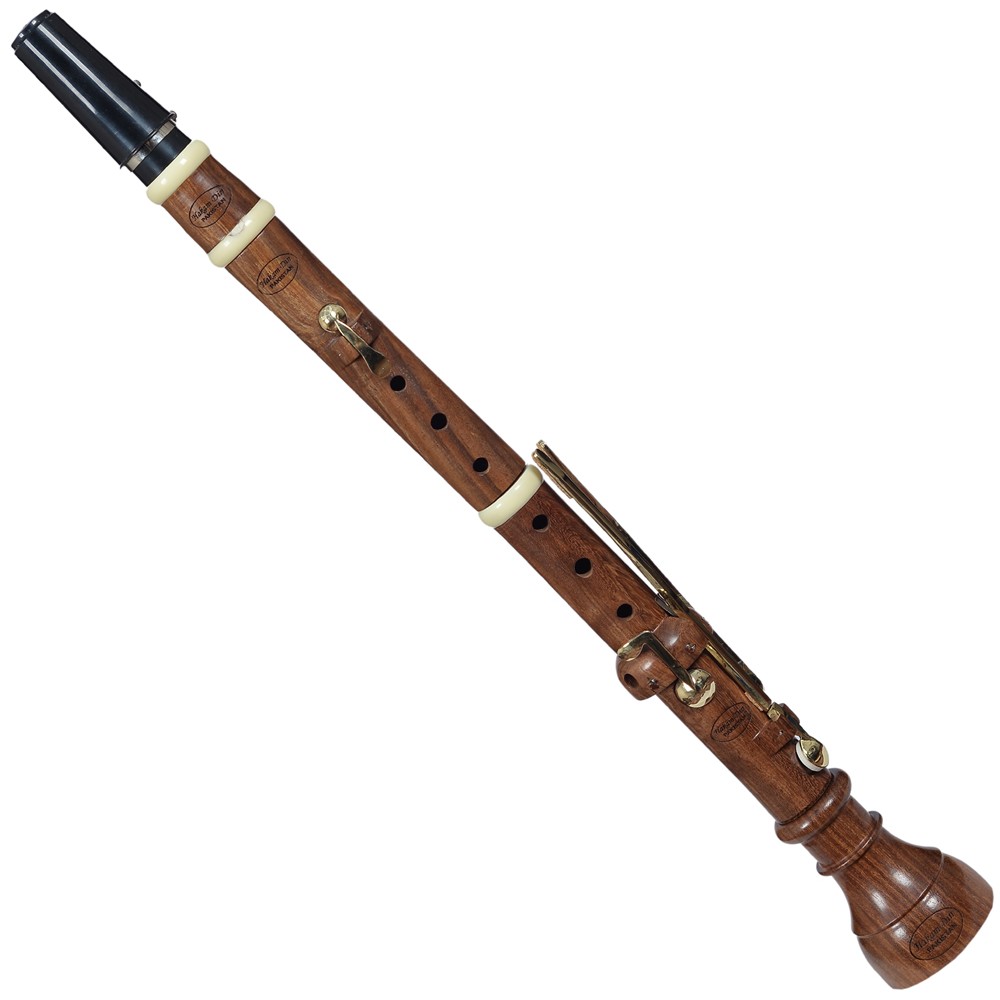
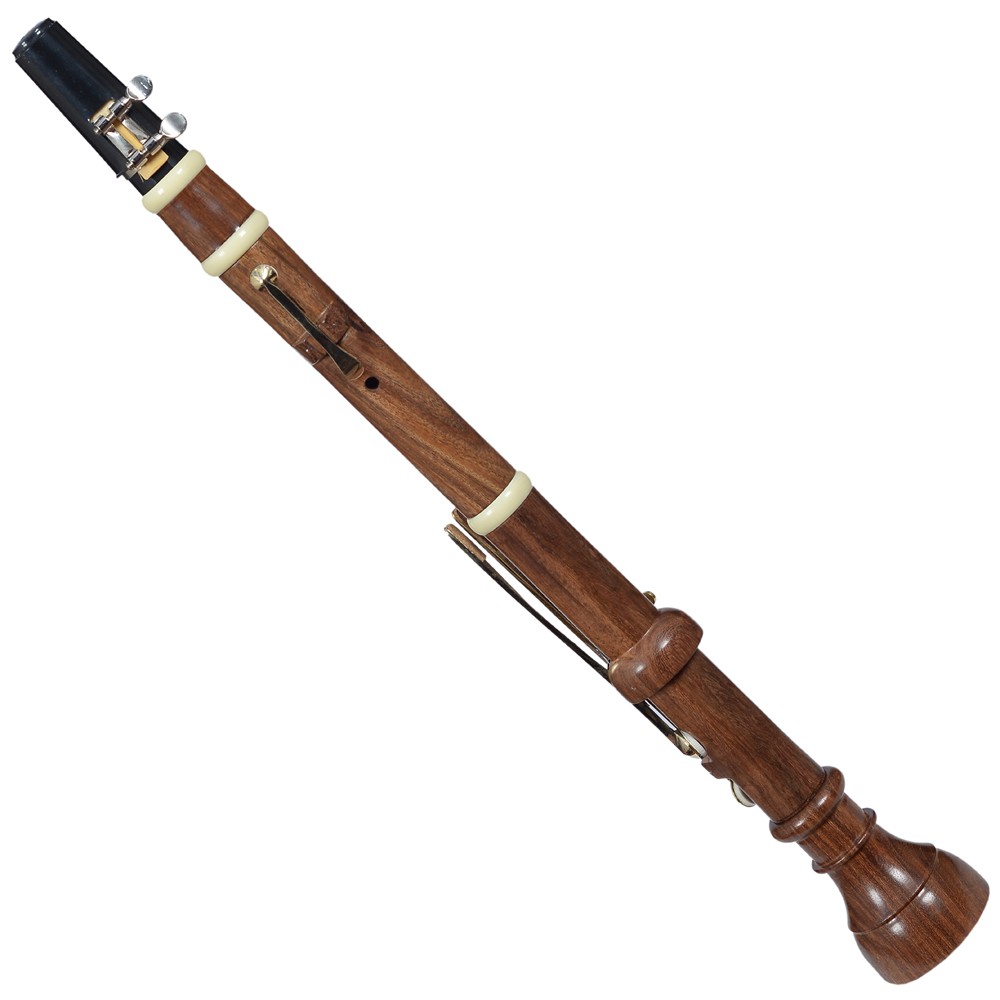
The keys include a speaker key, A key, E key, F# key for the left hand, along with an Ab key for the right hand.
A reimagining of the clarinet by Thomas Key, the renowned London maker (1805–1853).
- Crafted from Indian Cocobolo wood
- Wood ends are protected by imitation Ivory rings.
- The keys are casted from brass, steel springs with leather pads.
- Equipped with two barrels A440 and 442Hz
- It is designed to be used with a standard Eb clarinet mouthpiece. The barrel receiver is tailored for modern Eb mouthpieces, including the Vandoren M30.
- Additionally, accessories such as a plush lined protective case, extra set of pads, cleaning cloth, and a carrying strap are provided.
Note: You have the option to request additional keys of your choosing. Extra charges apply.
Waiting time is 60 days.
D Clarinet for Classical Period Repertoire
- Product Code: PC-D400
- Availability: In Stock
-
$1,000.00